For many established brands, the biggest roadblock to successful international expansion isn't marketing or logistics. It’s a deep misunderstanding of product safety standards.
Too often, founders see these standards as a compliance checklist to tick off. One pattern we continue seeing is that this perspective becomes a massive strategic blind spot, quietly eroding margin and market share.
The Hidden Drag on International Marketplace Expansion
Great products do not automatically become great international brands. We have seen a recurring pattern where strong domestic brands—often in premium consumer categories—begin to falter the moment they try to expand overseas. The problem is rarely a lack of market demand. It’s a failure to understand the new region’s safety ecosystem.
Their product, though perfectly safe and compliant at home, is often commercially misaligned with the safety culture, regulations, and even the unspoken consumer expectations of the new marketplace.
Compliance vs. Ecosystem Alignment
Thinking only in terms of ‘compliance’ is a shallow and expensive way to operate. Real market entry requires what we call deep ‘ecosystem alignment’. This means understanding that product safety standards aren't just dry technical documents. They are a direct reflection of a market’s legal history, consumer attitudes, and commercial norms.
Viewing compliance as a checklist is a common but dangerous oversimplification. Ecosystem alignment, in contrast, treats regional safety standards as a critical part of your go-to-market strategy, protecting both your brand and your bottom line.
A product can be technically compliant but commercially dead on arrival. One issue we repeatedly observe is a brand getting its product certified, only to face delistings because its safety warnings or even packaging materials don't line up with what local marketplace operators and customers expect.
The Commercial Consequences of Misalignment
This gap between domestic success and international friction creates a hidden drag on growth. The consequences are predictable and they are always severe:
- Costly recalls and logistical nightmares that burn through cash.
- Irreparable damage to your brand’s reputation, poisoning a new market for years.
- Stalled growth as your team is pulled into constant crisis management.
- A fragmented brand, where your product is available in some regions but blocked in others.
What becomes visible during international expansion is that every market ecosystem behaves differently. The brands that treat product safety as a strategic pillar—not just a bureaucratic hurdle—are the ones who build the trust and operational confidence needed for sustainable global growth.
Thinking Beyond the Certificate in a Fragmented World
One of the first things founders discover when they go global is that product safety standards aren't a simple checklist. They’re a complex patchwork of regional rules, each shaped by that market's legal history, consumer expectations, and even political pressures. Treating this as a box-ticking exercise is one of the most common and costly mistakes a brand can make.
The strategy you need for the United States, for instance, is worlds apart from what’s required to enter the European Union. They represent two completely different philosophies on product safety.
Two Philosophies, Two Different Risks
In the US, the approach, often guided by the Consumer Product Safety Commission (CPSC), centres on voluntary standards and powerful post-market enforcement. This means you can get your product to market relatively quickly, but the brand carries all the risk. If a safety issue emerges, the legal and commercial consequences can be devastating.
The EU flips this model on its head. Its pre-market conformity assessment puts the burden of proof on the brand before a single unit is sold. You’re required to build comprehensive technical files and provide a Declaration of Conformity (like the CE mark) to prove your product is safe from day one.
This isn't just a paperwork difference. For a founder, it changes everything—your operational risk, your go-to-market timeline, and how you manage cash flow. A ‘one-size-fits-all’ compliance strategy simply doesn’t work.
This fragmentation across markets quietly chips away at your margins and stalls growth through several hidden costs:
- Redundant Testing: A test report that gets you approved in one region might be rejected in another, forcing you into expensive and time-consuming re-testing cycles.
- Complex Labelling: Subtle differences in warning symbols, required text, and language translations can force you to manage multiple packaging SKUs, creating inventory headaches.
- Insurance Variations: Underwriters price risk based on the local regulatory landscape, meaning your liability insurance premiums can vary dramatically from one country to the next.
The image below shows the two mindsets we see time and time again when brands try to expand internationally.
This really highlights the core issue. Brands that treat safety as a shallow, cost-driven task inevitably run into friction and failure. In contrast, those that align deeply with each market’s ecosystem see safety as a core asset that protects the brand and unlocks real growth.
Chasing certificates without understanding the underlying system is a recipe for stalled expansion and expensive lessons learned.
What We Observe in Marketplace Compliance Reviews
Across multiple marketplace ecosystems, we see a dangerous pattern emerge when brands scale into new regions. There’s a pervasive over-reliance on supplier-provided compliance documents. Founders, eager to move quickly, often accept a supplier's 'global' compliance certificate as a golden ticket. This is a fundamental and costly miscalculation.
This mistake is especially common in categories like consumer electronics and household products, where complex supply chains can obscure the true origin and specificity of testing documentation. A certificate might look official, but it often lacks the detail required for a specific market.
The Myth of the ‘Global’ Certificate
A recent marketplace review revealed this vulnerability for a client in the connected devices space. Their supplier had provided a CE mark certificate, which they assumed covered them for all of Europe. It didn't. The certificate was insufficient for the specific national deviations required by the German market.
This single oversight placed their entire inventory in Germany at risk of being delisted. This is not a rare occurrence. Many trading blocs, including the EU, have national-level regulations that sit on top of the broader framework.
A crucial commercial reality becomes clear during international expansion: a product can be technically compliant but commercially unviable. Alignment with legal minimums is not the same as alignment with local consumer safety perceptions or retail partner requirements.
These partners, especially dominant marketplaces, often enforce standards that exceed the legal minimum to protect their own brand and reduce platform risk. They will not hesitate to suspend listings if there is even a hint of non-compliance, leaving you to deal with the fallout.
Beyond Legal Minimums
One issue we repeatedly see is the gap between legal requirements and marketplace expectations. A product might meet the letter of the law, but if its safety warnings feel inadequate to local consumers or if its materials are viewed with suspicion in that market, it will struggle.
Smarter brands understand this dynamic. They recognise that achieving product safety standards is not a one-time event but a continuous process of monitoring the ecosystem. They treat supplier documents as a starting point for verification, not the final word. They invest in understanding the nuances of each target market, from official national deviations to the unwritten rules of consumer trust.
This shifts compliance from a reactive cost centre to a strategic tool for building a resilient international brand. It’s the difference between simply listing a product and truly building a brand that can thrive in a new ecosystem.
When you start expanding internationally, you quickly realise that not all regulatory systems are the same. A product that’s perfectly compliant in the US can suddenly be illegal somewhere else, and Australia is a classic example of this.
The Australian framework for product safety standards often catches experienced brands by surprise. It’s a perfect case study in just how nuanced national regulations can be and why a "one-size-fits-all" compliance strategy is a recipe for failure down under.
The challenge isn't just about following the rules set by the Australian Competition and Consumer Commission (ACCC). It's navigating the complex relationship between federal laws and the separate regulations in each state and territory. This dual system creates traps that many brands simply aren't prepared for.
More Than Just Physical Safety
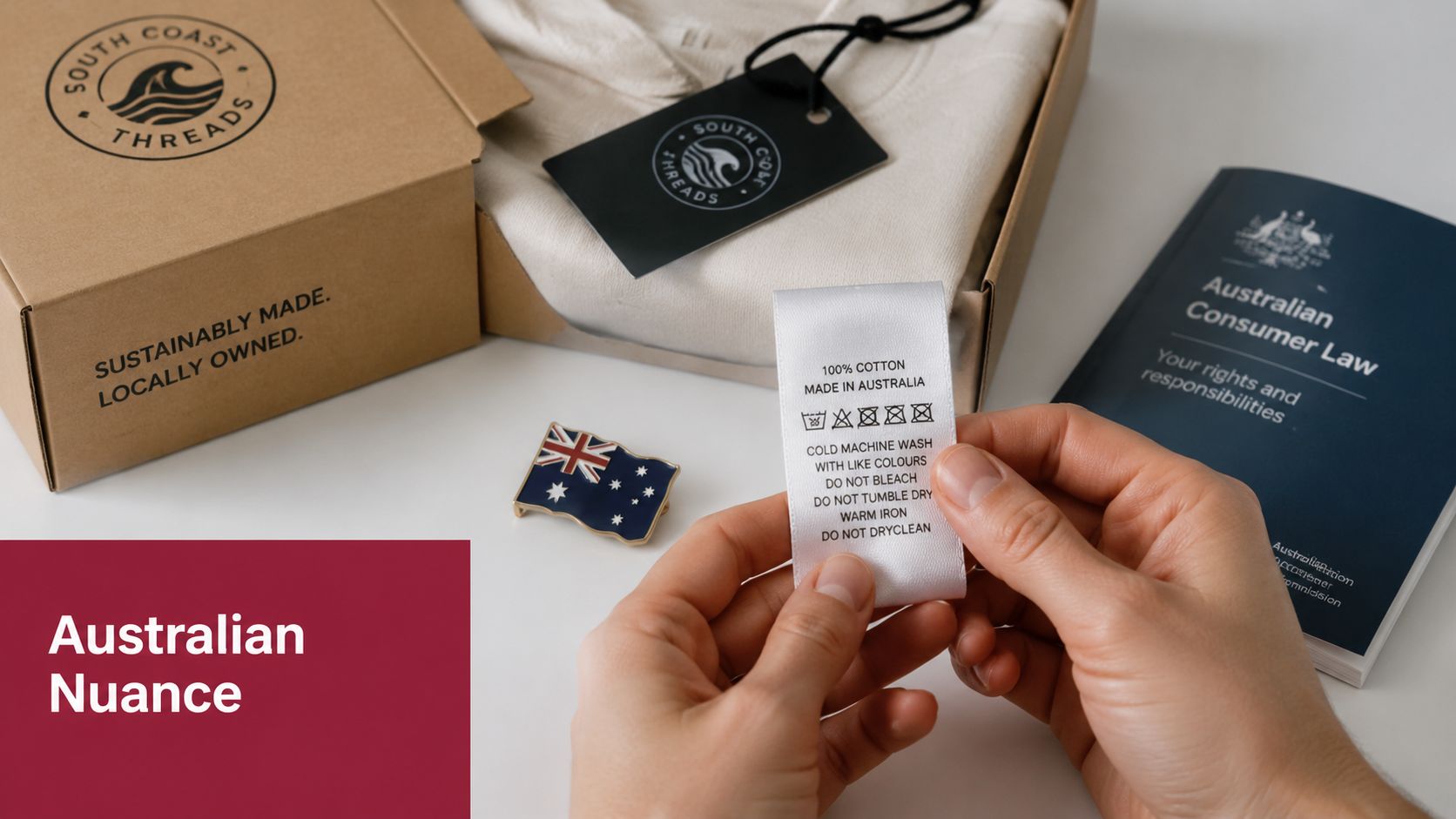
One mistake we see brands make over and over is focusing only on the physical safety of their product, just like they would for the US market. They’ll make sure their electronics won't overheat and their household goods won't break apart dangerously, but they completely miss Australia's strict mandatory information standards.
This is where a perfectly safe American product can get you into serious trouble. Something as simple as a missing or poorly formatted care label on a piece of clothing can breach Australian law. The product itself is fine, but because you failed to give the consumer the right information, it’s now non-compliant. You can learn more about these specific obligations in our comprehensive guide on product labelling requirements in Australia.
The consequences aren't minor. Australia has over 100 mandatory safety standards for high-risk products, and the penalties for getting it wrong are significant. The ACCC reported 347 product recalls in a single recent year, and a massive 78% of those were because products failed to meet mandatory standards. You can read more about Australian product safety regulations and recalls directly from the source.
From Cost Centre to Competitive Edge
This highlights a critical lesson for any brand scaling internationally: you’re not just listing a product in a new marketplace; you’re entering an entirely new commercial ecosystem. The strongest brands don’t just get their products certified. They map out the entire regulatory and consumer landscape before they even start.
They look for friction points across the whole journey, from how the product is designed to the exact wording on the packaging.
One pattern we continue seeing is that leading brands transform compliance from a reactive cost centre into a proactive competitive advantage. They understand that mastering a region's safety and information standards builds profound consumer trust and creates a resilient market position.
This ecosystem-aware approach prevents expensive mistakes, protects your brand’s reputation, and gives you the confidence to scale effectively. It’s this deeper operational intelligence that separates the brands that truly thrive internationally from those that just scrape by.
Information Standards: The Overlooked Half of Product Compliance
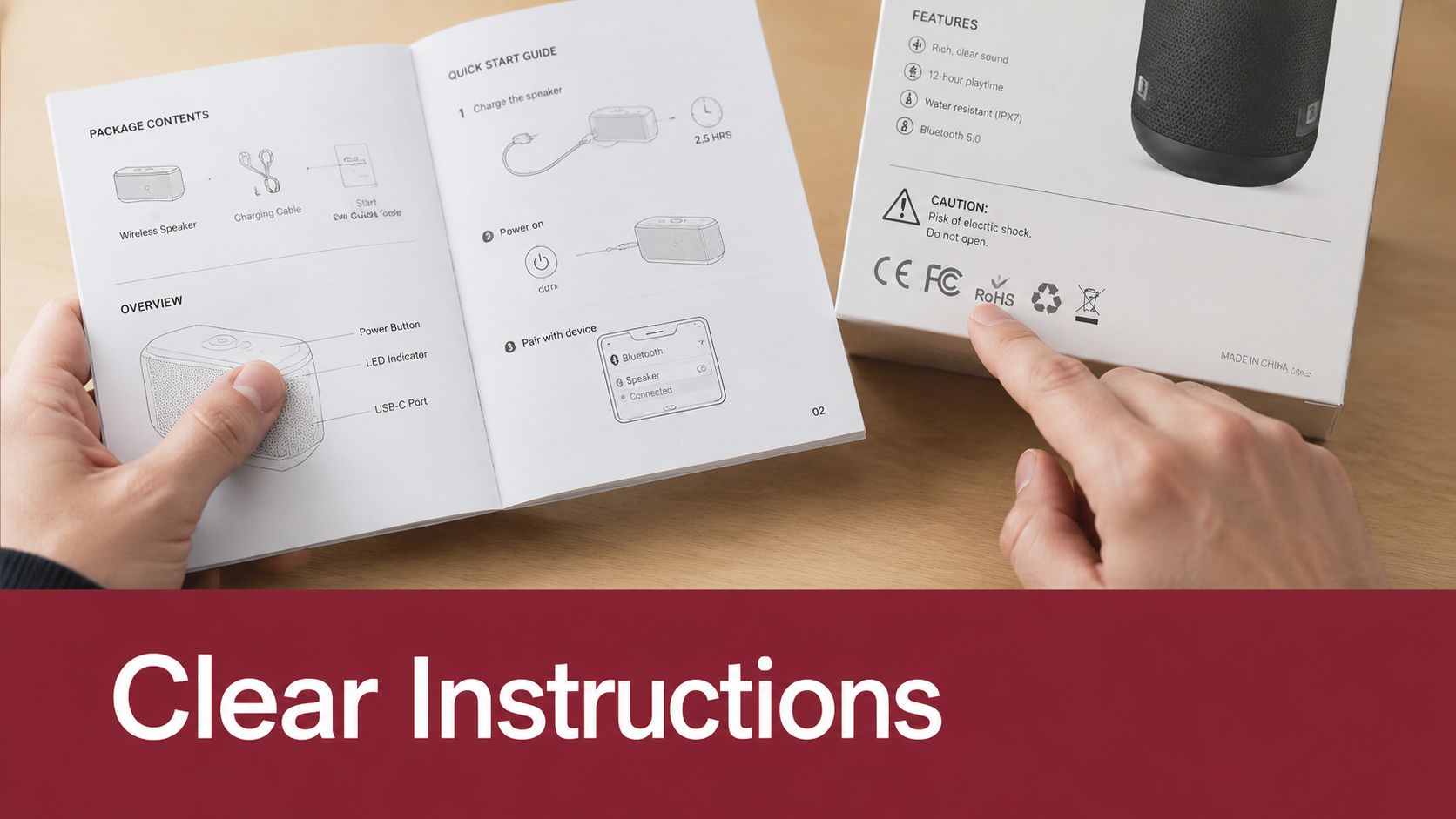
Product safety is about more than just physical construction—it's also about clear communication. One issue we repeatedly observe is founders focusing entirely on whether their product will break, while dangerously underestimating the mandatory information standards that govern what they must tell their customers.
This isn’t just about good practice. Using Australian regulations as an example, failing to provide the right information can be just as damaging as a serious design flaw. A simple mistake on a wellness product’s ingredient list, a missing warning on a smart device, or an incorrect care label on a textile can trigger recalls, fines, and immediate marketplace delistings.
The Commercial Impact of Missing Information
This isn’t a theoretical risk. In fact, Australia’s product safety framework includes both mandatory safety and information standards. The ACCC reported that in 2024, an alarming 62% of product recalls were due to inadequate labelling or missing safety warnings, which proves how seriously regulators take this. You can explore these specific Australian business regulations to see the data for yourself.
One pattern we constantly see is that informational compliance is treated as a last-minute design task. Stronger brands, however, treat it as a core part of risk management and customer trust, building it into their product development from the very beginning.
This highlights a crucial lesson for any brand planning to scale internationally. Mastering both the physical and the informational sides of product safety is non-negotiable. A strong approach also means securing other aspects of your brand’s operational integrity, a topic we cover in our guide to quality assurance standards.
Ultimately, ignoring the words on the box can be just as costly as what’s inside it.
Building a Commercially Cohesive Compliance Strategy
Shifting from a reactive, market-by-market scramble to a proactive, cohesive strategy is what separates brands that scale from those that stall. A commercially intelligent approach treats product safety standards not as a series of bureaucratic hurdles, but as a critical pillar of your global brand architecture.
It’s about moving compliance from the end of the production line right to the very beginning of the design process. This means designing products with a global mindset from day one, anticipating regional demands before they become roadblocks.
Creating a Centralised Compliance Library
One pattern we see again and again among high-growth brands is the development of a 'compliance library'. Think of it as a centralised intelligence hub that maps the intricate web of safety and information standards across all your target markets.
Instead of scrambling for information every time you want to enter a new region, you have a pre-vetted playbook. This library should detail:
- Product-specific standards for each region, from electrical safety to material composition.
- National deviations within larger trading blocs like the EU.
- Information and labelling requirements, including mandatory warnings, symbols, and languages.
Proactive Supply Chain Verification
A cohesive strategy also means moving beyond a blind reliance on supplier certificates. It requires establishing proactive supply chain verification processes. This isn't about mistrust; it’s about building operational resilience and protecting the brand value you’ve worked so hard to build.
Verifying that a supplier's documentation is not only authentic but also directly applicable to your specific target market is a non-negotiable step.
Instead of asking, "Are we compliant for this region?" the strategic question becomes, "Is our entire ecosystem—from design to documentation—structured to support multi-region expansion?" This perspective builds fulfilment confidence and protects hard-won brand equity during international growth.
This proactive approach transforms compliance from a fragmented cost centre into a powerful commercial asset. It ensures every product you ship is not just technically safe but commercially ready for every single marketplace it enters.
The process requires meticulous record-keeping, a topic we explore further in our guide to creating effective compliance documentation. This forward-looking strategy is the foundation for building a robust, cohesive, and truly international brand.
Common Questions About Global Product Safety
As founders and commercial directors start mapping out international expansion, a few big-picture questions always come up. We see them time and time again. Here are the answers we give leaders who are looking beyond simple box-ticking and toward building a truly resilient global brand.
Can I Rely on My Supplier's Compliance Certificates?
This is one of the most common and expensive mistakes we see brands make. Relying only on a supplier's certificate is a huge risk.
We’ve watched brands get delisted because a general CE mark from their factory didn't cover the specific national requirements in a market like Germany. A certificate that works in one country often means nothing in another.
The smart strategy is to use supplier documents as a starting point, but never the finish line. You have to independently verify and map the full regulatory landscape for every single market you plan to enter.
How Much Does International Compliance Cost?
Founders often ask this, but it’s the wrong question. Trying to put a single dollar figure on compliance is impossible—it varies wildly by product and region.
A better question is, "What is the true cost of getting it wrong?"
The financial and reputational damage from recalls, marketplace delistings, and brand erosion will always far exceed the investment in a proactive, ecosystem-aware compliance strategy. It’s an investment in brand resilience.
Think of it as insurance against catastrophic failure, not just another line item on a spreadsheet.
Which Region Is the Hardest to Enter for Product Safety?
There is no single "hardest" region, only "different" ones. Each market has its own logic.
The EU can feel heavy on pre-market paperwork and assessments, while the US market carries enormous post-market liability risks if something goes wrong. The challenge isn't one region being objectively harder than another.
The real friction comes from trying to apply your home-market mindset to a new and unfamiliar ecosystem. This misalignment also extends to your financial protections, which we cover in our guide to product liability insurance. Success depends on adapting your operational strategy to the specific demands of every new marketplace you enter.
At TPR Brands, we help established brands navigate these complexities, turning compliance from a costly hurdle into a competitive advantage. We build commercially cohesive international marketplace ecosystems for founders ready to scale deliberately.