You’re likely in a familiar position. Your product works. Domestic sales are stable. The team has already solved the early questions around sourcing, packaging, listings, and repeat demand. Now growth feels slower, and expanding into another Amazon marketplace looks like the obvious next move.
That’s where many brands make an expensive mistake.
International expansion rarely fails because the product is weak. It usually fails because leadership treats a new marketplace as a listing exercise instead of a market entry decision. A strong product can lose margin, lose positioning, and create channel problems very quickly when the expansion plan is thin.
For established consumer brands, especially in hardware, home improvement, household, and adjacent categories, the key question isn’t whether you can switch on a new Amazon store. It’s whether you can enter a new market without damaging brand value while still building a profitable operation.
The Flawed Myth of Easy Amazon Expansion
A lot of founders assume success transfers cleanly. If a product ranks well in the US, Canada, or the UK, surely it should perform in Australia or another English-speaking market with only minor tweaks. That logic is appealing because it keeps the plan simple.
It’s also incomplete.

Product strength is only the starting point
A domestic winner gives you evidence of demand. It doesn’t give you evidence of international fit. New markets introduce different price expectations, different competitive sets, different fulfilment realities, and different compliance standards. On Amazon, those differences show up fast because buyers compare products in a compressed, highly visible environment.
The common myth is this: open the local Amazon store, ship inventory, run ads, and demand will follow.
What happens is more operational. Brands discover that their price ladder no longer works once landed cost is recalculated. Their hero SKU isn’t the best entry product in the new market. Local competitors have stronger review depth in the exact sub-category they planned to enter. Packaging that worked perfectly at home creates friction elsewhere. None of those issues mean the brand shouldn’t expand. They mean expansion has to be designed.
Practical rule: International growth tests operational maturity before it rewards ambition.
The hidden cost of a weak entry plan
Founders usually underestimate three things.
- Brand translation: A product benefit that feels obvious at home may need sharper positioning abroad.
- Channel consequences: A rushed Amazon store launch can create conflicts with future retail or distributor plans.
- Margin pressure: Freight, platform fees, local adaptation, and pricing resets can turn volume into weak profit.
That’s why “go global” advice often disappoints serious operators. Most of it is written for first-time sellers looking for access, not for established brands trying to preserve control.
What smart operators recognise early
The brands that expand well don’t treat Amazon as the strategy. They use Amazon as one part of a market entry model. They ask harder questions first.
| Decision area | Weak assumption | Better operating question |
|---|---|---|
| Demand | “If it sells here, it will sell there” | “What evidence shows local demand already exists?” |
| Channel | “We’ll start on Amazon and sort the rest later” | “Will this entry path help or hurt later channel expansion?” |
| Pricing | “We’ll convert the current price” | “Can we protect margin after landed cost and local expectations?” |
| Operations | “We can adapt after launch” | “What must be correct before inventory goes live?” |
Good products don’t automatically become strong international brands. They become strong international brands when the company entering the market is disciplined about selection, economics, and execution.
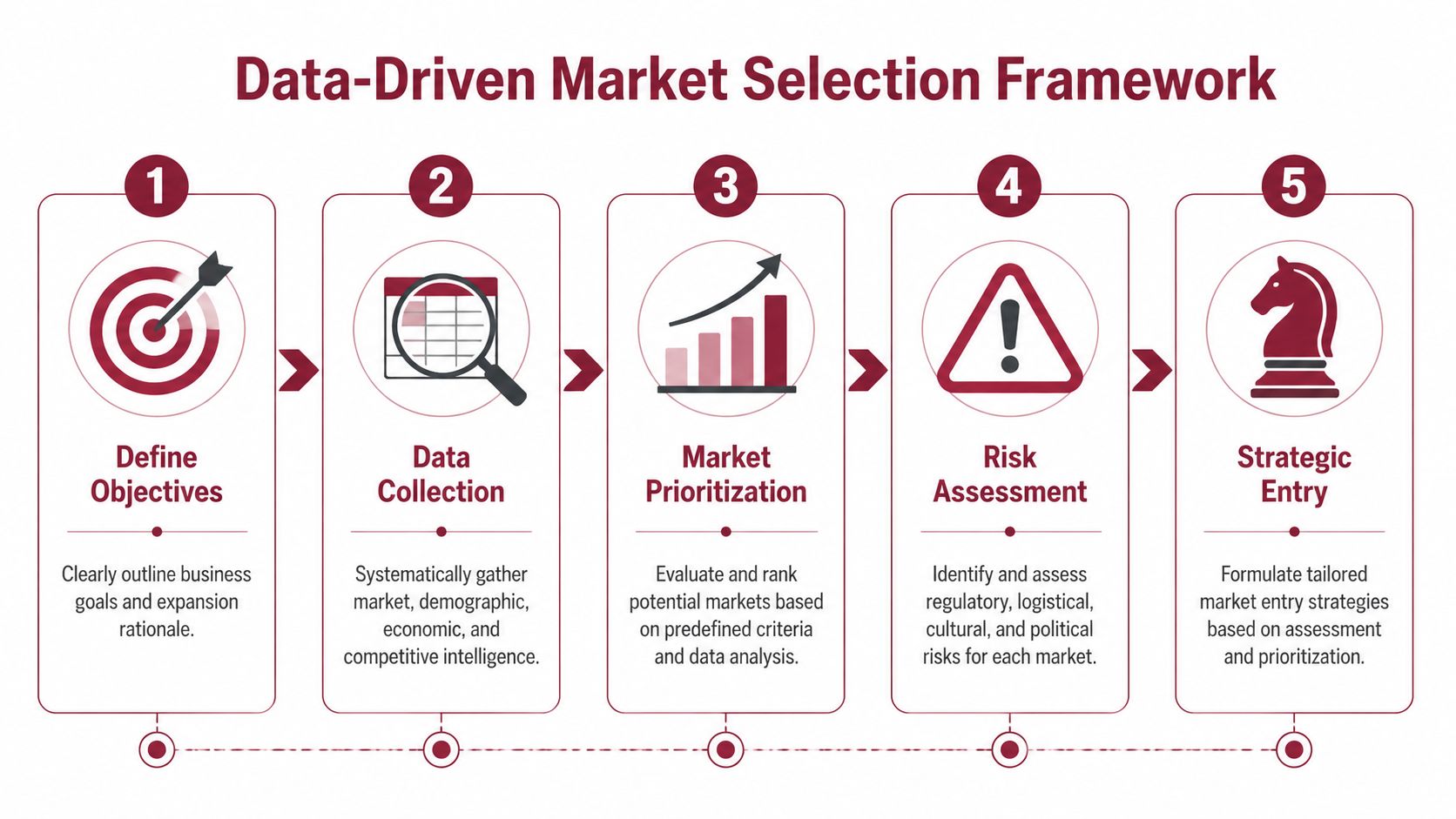
How to Choose the Right Market for Amazon Expansion
A founder sees a few international orders come through, notices lower apparent competition in a new Amazon market, and assumes the decision is made. Then six months later the business is carrying slow stock, spending heavily to force reviews, and discounting to meet local price expectations. The problem usually is not demand alone. It is weak market selection.
The first market has a job to do. It should teach you how your brand travels, protect margin while you learn, and give you a realistic path to repeatable growth. For established hardware and consumer brands, that matters more than chasing the biggest headline opportunity.
Australia is a useful test case for that kind of decision. It feels accessible to many North American and UK operators, but it still exposes poor assumptions quickly.
Start with demand that already exists
The strongest early signal is demand you can already see in your own business. Organic cross-border orders, distributor inquiries, direct traffic from the target country, and customer service requests about local availability all carry more weight than generic market-size reports.
That signal is imperfect, but it is useful because it comes from buyers willing to act. I trust observed demand more than optimism from a spreadsheet.
Use Amazon’s own tools the same way. If Marketplace Product Guidance or related forecasting tools keep surfacing the same SKUs for the same country over multiple reporting periods, pay attention. One spike can be noise. Repeated signals are more reliable when you are deciding where to place inventory and management attention.
For brands assessing how Amazon fits into a broader expansion plan, TPR’s perspective on Amazon marketplace expansion is a practical reference.
Judge whether the category is actually winnable
A market can be attractive on paper and still be a poor entry point for your brand. The usual issue is not total demand. It is the cost of earning visibility and trust inside the category.
Review velocity is a good proxy. If incumbent listings accumulate social proof quickly, your launch budget needs to cover that gap without destroying contribution margin. In hardware and home categories, that often changes the answer. A smaller category with slower review accumulation can be a better first move than a large category dominated by entrenched leaders.
Here, experienced operators separate revenue potential from winnability. The right question is not, “Can we list here?” It is, “Can we gain enough traction here without training the market to buy us on discount?”
Price for the local market, not your home market math
Currency conversion is the easy part. Local price architecture is harder.
Australian customers compare aggressively across channels, including cross-border options. If your landed cost forces you above the local value threshold, the product may still sell, but usually at a lower conversion rate and with more promotional pressure than your base case assumed. That is how brands mistake activity for traction.
Domestic hero SKUs also need scrutiny. Products that lead in the US or UK often carry the wrong mix of price point, competitive density, feature emphasis, or bundle structure for Australia. The better entry SKU is often the one with clearer differentiation and cleaner economics after freight, GST, fees, and support costs.
Use a decision filter that protects brand value
Before approving a launch, pressure test the market with questions like these:
-
Are buyers already trying to purchase from that market?
Organic orders, search interest, and inbound requests are stronger than generic TAM estimates. -
Do demand signals repeat over time?
A stable pattern is more useful than a short-lived spike. -
Can you earn reviews and ranking without overspending?
If the path to visibility depends on sustained discounting or heavy ad subsidy, the market may be unattractive for a premium or mid-premium brand. -
Do service levels hold up after the inventory lands?
Delivery speed, returns handling, replacement parts, and customer support matter more in hardware than many founders expect. -
Can your positioning survive local comparison shopping?
If the offer only works when buyers ignore nearby substitutes, the market is not ready for you yet. -
Does this market support your next channel move?
A fast Amazon launch that damages future retail, distributor, or DTC options is often an expensive shortcut.
Why Australia stays on the shortlist
Australia keeps appearing in expansion plans because it offers a manageable first layer of complexity. Language adaptation is lighter than in many other markets. Consumer behavior is familiar enough for English-speaking brands to learn quickly. Amazon is established, but many categories still reward operators who localize carefully and avoid lazy copy-paste launches.
That does not make it easy.
It makes it legible.
For established brands, that is a better reason to enter a market than size alone. A good first market should let you test assortment, pricing discipline, content localization, and fulfilment performance without putting the brand under unnecessary strain. Australia can do that, but only if the decision is based on demand quality, competitive winnability, and margin resilience rather than surface-level familiarity.
Your Go-To-Market Strategy Beyond Amazon
Most brands default to the path that feels most controllable. They open an Amazon store, send stock into FBA, and manage the launch from head office. Sometimes that works. Often it creates constraints that only become visible later.
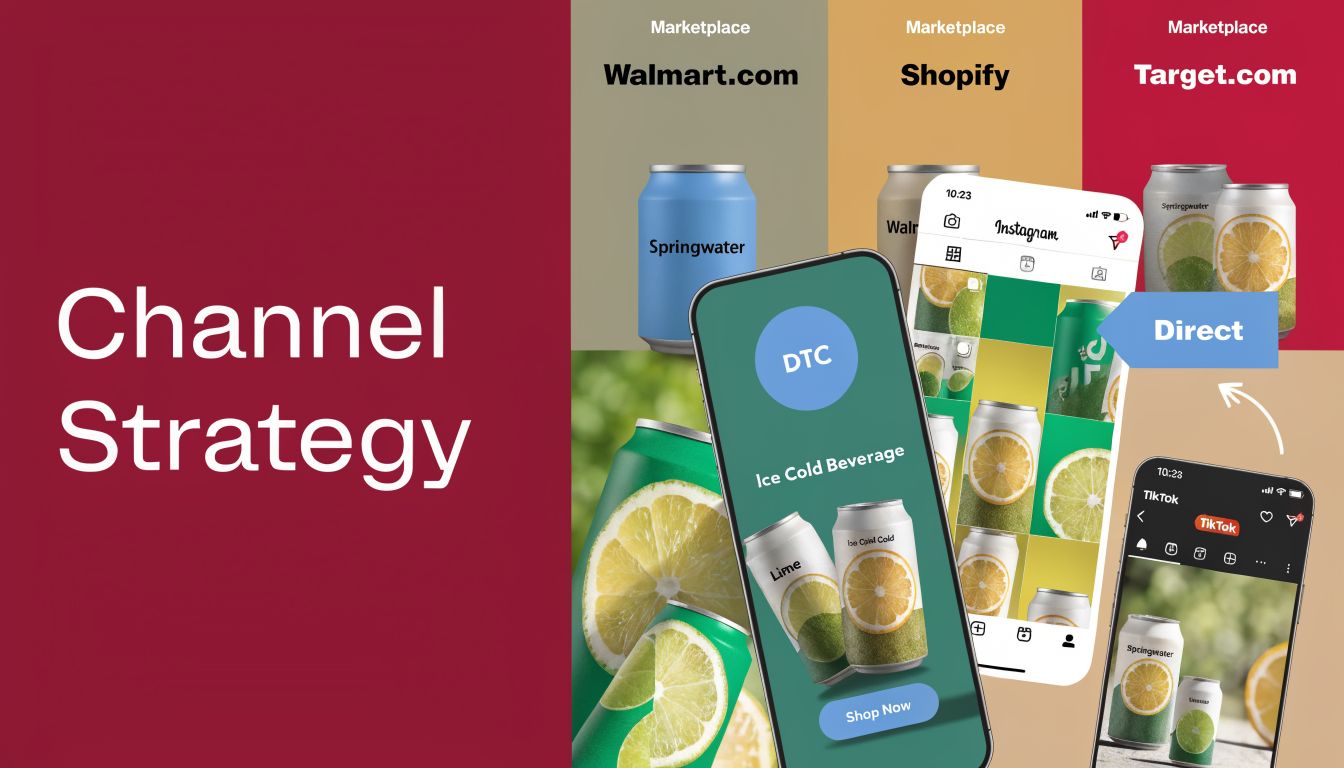
The better question is not “How do we launch?” It’s “What market entry structure gives us the right balance of speed, control, margin, and future flexibility?”
Four realistic entry models
There are usually four paths on the table.
| Model | Brand control | Speed to market | Margin profile | Main trade-off |
|---|---|---|---|---|
| Direct on Amazon | High in theory | Moderate | Can be attractive if operations are efficient | Management complexity sits with your team |
| National distributor | Lower | Can be fast if relationships already exist | Margin is shared earlier | Less control over positioning and marketplace behaviour |
| Hybrid retail and marketplace | Medium | Slower to coordinate | Can be healthy if channels are aligned | Channel conflict risk rises if sequencing is poor |
| Strategic expansion partner | Shared but structured | Often faster than building from scratch | Margin is shared, but capability is imported | Requires partner fit and clear operating roles |
Direct can look cheap and become expensive
Running the launch yourself gives you close control over listings, pricing, advertising, and inventory. For founders who value ownership, that’s appealing. But the direct path only stays efficient if the internal team can also handle local compliance, customer service nuance, replenishment timing, tax and landed cost modelling, and the practical realities of marketplace operations in another region.
That’s where a lot of brands stall. The Amazon store itself is manageable. The surrounding work isn’t.
- Listing control: You control the content and can localize properly.
- Inventory pressure: You carry the forecasting risk directly.
- Team load: Commercial, operations, and finance all absorb extra work.
- Future upside: If you get it right, you keep more strategic advantage.
Distributors solve some problems and create others
A national distributor can shorten the path to shelves and local presence. For some brands, especially where retail relationships matter, that’s sensible. But distribution-led entry can weaken your brand’s presentation on marketplaces if nobody owns the digital channel tightly.
That’s where founders get frustrated. They wanted market access. They got access, but not necessarily brand consistency.
Operator’s view: Access without channel governance often produces messy growth.
Hybrid models require sequencing discipline
A hybrid launch can be powerful. You build marketplace demand while opening selective retail or trade channels. Done well, that creates multiple demand streams and stronger market presence.
Done badly, it creates pricing confusion. Retail buyers don’t like discovering they’re competing with an unmanaged Amazon store. Marketplace buyers don’t respond well when the offer looks inconsistent across channels. Hybrid only works when one team owns the rules around assortment, pricing architecture, and timing.
A more structured expansion process often sits inside a broader global product launch model, particularly when the goal is to coordinate marketplaces with retail or distributor entry instead of treating them as separate projects.
Why partnerships are often the pragmatic choice
An expansion partner sits between pure self-management and pure outsourcing. The value isn’t just execution. It’s imported market judgement. That includes what to launch first, how to adapt the pack, where channel conflict is likely, and how to keep the brand from drifting while the market is still being tested.
That’s also where a firm like TPR Brands can fit, as one option among direct management, distributors, and hybrid structures. Its role is factual and operational: helping established brands expand into new channels and regions while protecting positioning and margin structure.
This is a useful overview before choosing a route:
What usually works and what usually doesn’t
What works is choosing a structure that matches your real operating capability.
What doesn’t work is pretending a lean internal team can suddenly manage localization, marketplace performance, compliance adaptation, and international logistics without trade-offs. Founders don’t lose because they lacked ambition. They lose because they selected a channel model that was misaligned with their actual capacity.
Compliance, Logistics, and Pricing: The Operational Core
A founder approves inventory, signs off creative, and expects the new Amazon store to start proving demand. Then the listing stalls in review, cartons need relabelling, freight costs come in above plan, and the price that looked viable in a spreadsheet no longer leaves enough margin to advertise. That is how many international launches fail. The product is fine. The operating model is not.
Compliance is market access, not admin
Established product brands often underweight compliance because the product already sells well at home. That logic breaks quickly in cross-border expansion. A strong domestic SKU can still be commercially unfit for a new market if the pack, claims, certifications, or barcode setup do not match local requirements.
In Australia, the practical issues usually sit in the adaptation layer. That includes ACCC expectations, mandatory standards such as AS/NZS for electrical tools, packaging localization, GS1 Australia barcode requirements, and category-specific approvals. The risk is not limited to a delayed product page. A rejection or takedown can leave stock idle, interrupt launch timing, and give the team a false read on demand because the offer was never fully market-ready.
For hardware and consumer product brands, this matters even more because compliance decisions affect brand value. If a product arrives with packaging that looks improvised or with documentation gaps that trigger retailer concern later, the problem is larger than one Amazon listing. It can weaken trust across channels.
Fixing compliance before stock moves is usually the cheaper decision
Pre-compliance work adds cost upfront. In many categories, it removes more expensive problems later.
The trade-off is straightforward. Review the product, packaging, labels, manuals, and claims before the first shipment, or absorb the cost of relabelling, storage delays, listing interruptions, and rushed corrective work after inventory lands. For low-risk products, an internal review may be enough. For electrical, household, children’s, or regulated categories, specialist review is often the more profitable choice because the downside of getting it wrong is high.
Treat adaptation work as part of launch design. If the plug type, warning language, carton markings, or product inserts need to change, those changes belong in the margin model from the start.
Logistics choices set the ceiling on performance
Logistics is not a back-office task. It determines how much inventory you can risk, how fast you can replenish, and whether your service level supports the price and ad strategy.
The main decisions are operational, but they are also strategic:
- Freight design: Build around test volumes or around scale. The wrong answer either ties up too much cash or creates early stock pressure.
- Customs and import setup: Confirm broker, tariff classification, and paperwork before goods ship. Errors here create delays that marketing cannot fix.
- Fulfilment structure: Choose Amazon FBA, a local 3PL, or a hybrid model based on control, speed, and channel requirements.
- Inventory placement: Put stock where it can serve demand efficiently, not merely where inbound freight is easiest.
I have seen brands overstock to avoid going out of stock, then spend months discounting through the wrong inventory position. I have also seen brands test too lightly, win early traction, and lose ranking because replenishment could not keep up. Both outcomes come from weak operating design, not weak products.
For teams comparing these models, TPR’s guidance on fulfilment and operational support is a useful reference point.
Pricing has to survive the real cost stack
Many teams start with the domestic retail price and try to make the export maths fit. That approach usually compresses margin until the business is funding growth with hope.
Build pricing from the fully landed cost base instead. Include freight, customs, platform fees, returns, tax treatment, local packaging changes, promotional spend, and the level of advertising needed to earn visibility. Then test whether the end price still fits the local category. If it does not, the answer may be to change pack configuration, adjust channel strategy, or delay entry until costs improve. Cutting price without redesigning the model usually damages both margin and brand position.
A simple planning model helps:
| Pricing layer | What to test |
|---|---|
| Ex-works or transfer cost | Is the starting cost stable enough for export volume? |
| Freight and customs | What does landed cost look like under realistic replenishment assumptions? |
| Platform and channel fees | Can the amazon store economics support ad spend and returns? |
| Local adaptation cost | Have packaging, labelling, and compliance changes been included? |
| End-customer price | Does the final price still fit the local category expectation? |
Run the three together
Compliance, logistics, and pricing cannot be managed in isolation. Packaging changes affect unit cost. Fulfilment choices affect service levels and stock depth. Price constraints remove room for freight inefficiency and heavy discounting.
That is the operational core of international expansion. Brands do not protect value by getting listed everywhere they can. They protect value by entering markets with an operating model that can hold margin, support service, and meet local requirements without constant correction.
Executing the Launch From Day One to Year One
A founder approves the first international Amazon launch, inventory lands, ads switch on, and the dashboard starts moving. Then the hard part begins. The first year is not a celebration of getting listed. It is a controlled test of whether the brand can win in a new market without giving up margin, pricing discipline, or positioning.
Set that standard early. Year one should answer three questions with evidence: is there real demand, do unit economics still work after launch pressure hits, and can the brand scale here without training the market to buy on discount?
The first ninety days are for clean signals
Early results only help if the offer is local enough to be judged fairly. If the content reads like a direct export from the home market, poor conversion can reflect mistrust or confusion rather than weak demand.
That means getting the basics right before drawing conclusions. Titles need local search language. Images need to show use cases that make sense in-market. Sizing, technical specs, plug formats, warranty language, and packaging references need to match what customers expect. Hardware and consumer product brands feel this quickly because buyers notice small mismatches fast.
The launch mix usually includes:
- Sponsored visibility: Paid search to build discoverability on priority terms and defend early click share.
- Controlled promotions: Introductory offers that increase conversion without resetting the brand’s reference price.
- Review development: Ethical post-purchase follow-up that helps generate credible early feedback.
- External support: Traffic from existing customers, distributors, retailers, installers, or owned channels where that fits the market model.
Early launch data has to be clean enough to support decisions. Otherwise a brand ends up fixing the wrong problem.
Track availability with the same discipline as sales
Revenue can hide weakness. A launch can look healthy while stock depth, ad efficiency, and conversion quality are already deteriorating.
That is why experienced operators watch shelf presence closely. In hardware especially, availability gaps create openings for competitors, but they also expose where the category is poorly served. A brand that stays in stock, protects content quality, and holds service levels can take share without resorting to heavy discounting.
Post-launch reviews should cover more than top-line sales:
- Contribution by SKU: Which products bear freight, fees, returns, and advertising pressure?
- Conversion quality: Are customers clearly understanding the product, or are reviews exposing localization gaps?
- Availability consistency: Are stock-outs suppressing rank and forcing expensive recovery spend?
- Traffic mix: Are paid and organic sales developing in a healthy balance, or is the business too dependent on ads?
- Brand position: Are promotions, coupon use, or reseller activity starting to weaken price integrity?
Manage year one like a portfolio
The initial SKU plan is a starting point, not a commitment. Strong brands adjust faster than weak ones because they are willing to remove friction, cut low-quality volume, and back the products that strengthen the market position.
I usually look for three roles across the opening assortment. One SKU generates trust and review volume. Another carries margin. A third may win in a narrower use case that the broader hero product never fully captures. If one product is attracting traffic but dragging contribution down, it may still have a role. If it brings little traffic and weak margin, it is taking up attention that should go elsewhere.
This matters more for established brands than for first-time sellers. A founder with a real business at home is not trying to prove that any SKU can sell on Amazon. The goal is to build a market entry model that protects the asset.
Niche wins often deserve more capital than hero products
Many brands enter a new market assuming the domestic bestseller should lead the expansion. Sometimes that works. Often it does not.
Local search behavior, competitor gaps, compliance friction, and pricing bands can shift demand toward a narrower variant, bundle, or use-case-specific product. That is common in hardware and consumer products because the buying decision is often practical. Customers search for the exact problem they need solved, not the broad brand story the company uses at home.
Follow the evidence. If a niche SKU converts cleanly, stays in stock, attracts better reviews, and requires less discount support, increase focus there. Protecting brand value often means scaling the product that fits the market best, not forcing the original plan.
Governance gets harder after launch
Pre-launch work is mostly about preparation. Post-launch work is about judgement.
Set a review rhythm that forces decisions instead of passive reporting:
- Weekly: stock cover, ad efficiency, customer feedback, and listing issues
- Monthly: contribution margin, pricing pressure, return drivers, and SKU role
- Quarterly: assortment changes, market-specific expansion bets, and whether the current operating model still supports the brand properly
The first year should leave the business with a clear answer. Commit more capital, refine the model, or slow down before the market starts teaching expensive lessons.
Why Strategic Partnerships Outperform Solo Expansion
By the time a brand has worked through market selection, channel design, compliance adaptation, logistics planning, pricing architecture, and first-year execution, one conclusion usually becomes clear. International expansion isn’t hard because any single task is impossible. It’s hard because all of those tasks have to work together at the same time.
That’s why solo expansion often looks efficient on a spreadsheet and becomes expensive in practice. Internal teams can usually manage one or two parts well. They struggle when market nuance, operational detail, and channel sequencing all need attention at once.
The real value of partnership is decision quality
A strategic partner doesn’t just add hands. It adds judgement that has already been tested in-market. That changes the quality of decisions around launch sequencing, compliance timing, assortment selection, retail interactions, and margin protection.
The point isn’t to outsource responsibility. It’s to reduce avoidable learning costs while preserving brand control where it matters.
Strong brands rarely need more ambition. They need fewer unforced errors.
Smart expansion protects the asset
Founders who have built real traction at home shouldn’t treat international growth as a gamble. The brand is already an asset. Expansion should increase its value, not expose it to rushed discounting, weak localization, compliance setbacks, or unmanaged channels.
That’s the practical case for partnerships. They let a company enter faster with more structure, while avoiding the trap of building a full international operation before market fit is proven.
At TPR Brands, the work sits exactly in that space. The focus is helping established product companies expand into new markets and channels with more control, clearer positioning, and stronger operational alignment.
If you’re assessing whether your product is ready for a new Amazon store, or whether your current expansion plan is putting margin and brand value at risk, TPR Brands is one option to evaluate alongside building the capability internally.