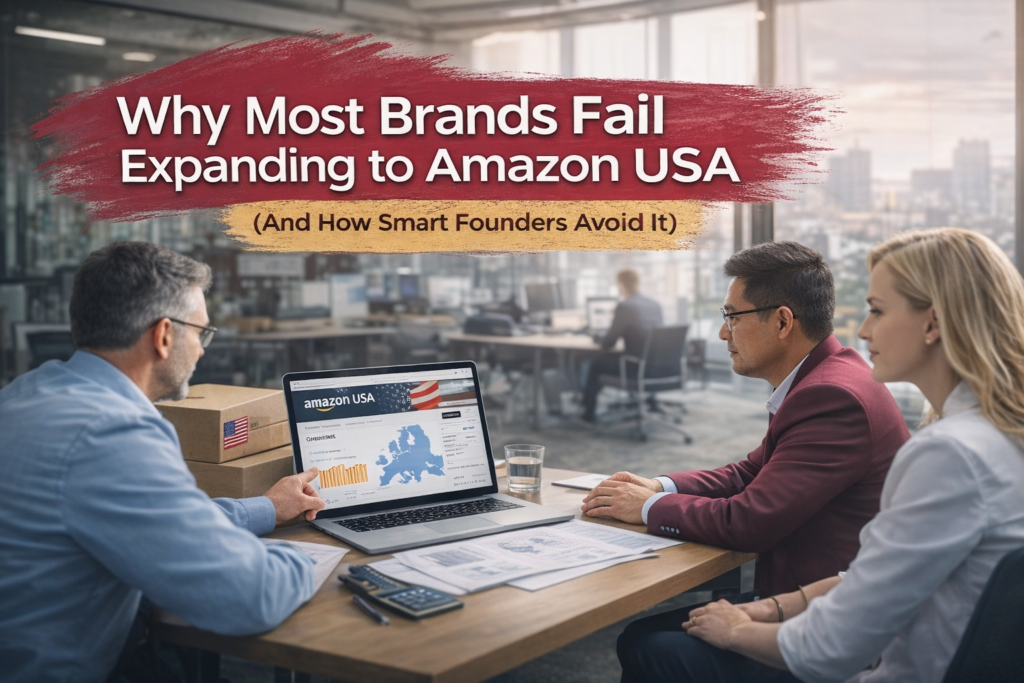
Expanding to Amazon USA is often seen as the ultimate growth move for product brands — but without the right marketplace strategy, it’s also where many businesses lose the most money.
But here’s the uncomfortable truth: many brands fail when attempting international expansion.
At TPR Brands, we’ve seen this first-hand working with brands expanding into Amazon USA from Australia, Canada, and other international markets.
Stock stuck in warehouses.
Listings live but not converting.
Ad spend climbing with no traction.
On the surface, everything looks “set up.”
Behind the scenes, it’s falling apart.
The reality is, expanding to Amazon USA isn’t just a bigger version of what you’re already doing. It’s a completely different game. For brands looking to expand to Amazon USA from overseas, this difference is where most costly mistakes happen.
The problem is rarely the product itself. Most founders exploring global marketplaces already have proven products and established demand in their home market.
What usually fails is the expansion strategy behind the launch.
Who This Guide Is Based On
This guide is based on real-world execution working with brands expanding into Amazon USA.
It reflects what actually happens during international launches — across logistics, listings, advertising, and operational scaling — not theory.
Amazon USA operates very differently from smaller Amazon marketplaces. Without the right preparation across logistics, compliance, brand positioning and advertising, many brands quickly burn through budgets without gaining traction.
Understanding the most common failure patterns can dramatically improve your chances of success.
For brands looking to expand to Amazon USA from overseas, this difference is where most costly mistakes happen.
Key Reasons Brands Fail Expanding to Amazon USA
| Issue | Impact on Expansion |
|---|---|
| Poor market localisation | Low conversion rates |
| Logistics mismanagement | Stockouts and delays |
| Weak advertising strategy | High PPC spend without ranking |
| Lack of brand protection | Listing hijackers and price erosion |
| No operational infrastructure | Scaling becomes impossible |
The Opportunity of Amazon USA for Product Brands
Amazon’s United States marketplace is the largest ecommerce platform in the world. With hundreds of millions of customers and more than 150 million Prime members, it offers enormous reach for brands capable of operating at scale.
To understand the difference, compare the size of the two ecosystems. According to marketplace data published by Statista, Amazon remains the largest ecommerce marketplace globally.
This is exactly why so many brands rush in too early.
They see the scale… but underestimate the systems required to support it.
And that gap between expectation and reality is where most expansion attempts fail.
Why Most Brands Expand Too Early
One of the biggest mistakes founders make is expanding to Amazon USA before their systems are ready.
We regularly see brands enter the US market with:
- no proven pricing structure for international margins
- weak listing conversion foundations
- no structured PPC strategy
- limited control over distribution and resellers
At TPR Brands, we typically stabiliZe these elements before scaling a brand into the US market — because once spend begins, mistakes compound quickly.
Amazon Marketplace Comparison
| Marketplace | Estimated Customers | Market Scale | Competitive Intensity |
|---|---|---|---|
| Amazon Australia | ~10 million | Smaller but growing | Moderate |
| Amazon Canada | ~25 million | Strong mid-sized market | Competitive |
| Amazon USA | 150+ million Prime members | Largest global marketplace | Extremely competitive |
The scale of Amazon USA is exactly why so many brands want to enter the market.
However, the complexity also increases dramatically.
If you’re still building your operational foundation locally, our guide on how to sell on Amazon Australia explains the core systems brands typically establish before expanding internationally.
Common Failure Patterns When Brands Expand to Amazon USA
After working directly with brands across multiple product categories and international Amazon launches, we consistently see the same failure patterns emerge.
Successful founders often assume international expansion will follow the same pattern as their domestic growth.
In practice, several predictable mistakes repeatedly appear when brands attempt to enter the US marketplace.
Failure Pattern Overview
| Failure Pattern | What Happens | Result |
|---|---|---|
| Treating the US market like a larger version of home | Listings copied without localisation | Poor conversion rates |
| Underestimating logistics complexity | Inventory delays and customs issues | Stockouts and launch failure |
| Launching advertising without a strategy | High PPC spend with little ranking improvement | Advertising losses |
| Ignoring brand protection | Unauthorised sellers join listings | Price erosion |
| Expanding without infrastructure | Operational chaos during scaling | Burned budgets |
Understanding these patterns helps founders avoid the most expensive mistakes.
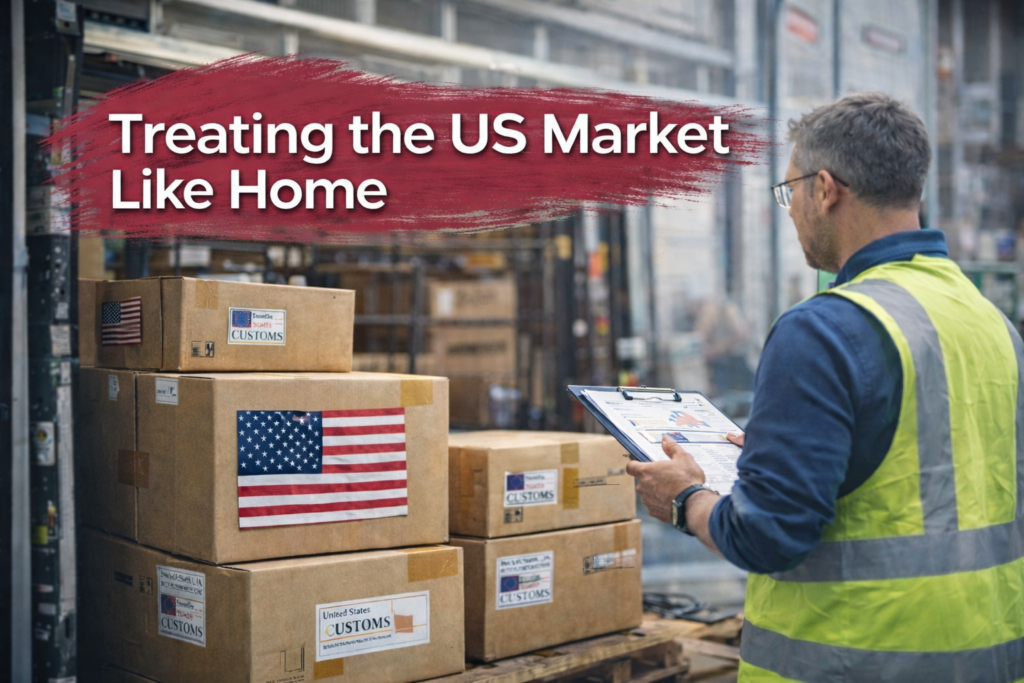
Failure Pattern 1: Treating the US Market Like a Bigger Version of Home
One of the most common expansion mistakes is assuming consumer behaviour will be similar across countries.
American customers often respond differently to:
• pricing structures
• product positioning
• listing style
• review expectations
• delivery speed
Listings that work perfectly in Australia or the UK may underperform in the United States without localisation.
Brands that succeed treat each new market as a distinct customer environment.
Failure Pattern 2: Underestimating Logistics Complexity
Logistics is where many expansion plans start to break down.
Shipping products into Amazon’s US fulfilment network involves far more than simply arranging freight. Founders must manage customs declarations, duties, freight forwarders, FBA preparation requirements, and ongoing inventory planning.
Without experience in international supply chains, brands often encounter issues such as:
• products held at customs
• incorrect tariff classifications
• unexpected duty costs
• inventory delays causing stockouts
These disruptions can destroy the early momentum of a new marketplace launch.
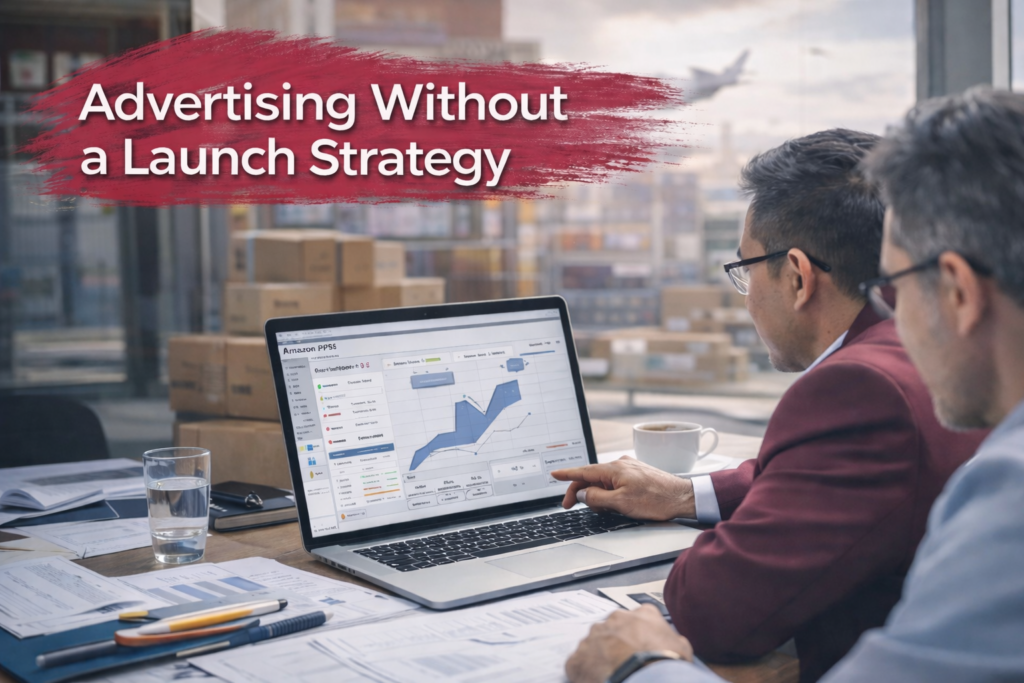
Failure Pattern 3: Advertising Without a Launch Strategy
Amazon PPC is essential for launching new products in competitive markets like the United States.
However, advertising must be approached strategically.
Many brands start campaigns immediately without a structured launch plan. The result is often high advertising costs without meaningful ranking improvement.
Effective product launches typically include:
• targeted keyword discovery campaigns
• review generation strategies
• phased advertising budgets based on conversion data
• gradual scaling as organic ranking improves
Advertising should support a broader marketplace strategy rather than acting as the sole growth driver.
Failure Pattern 4: Ignoring Brand Protection
Another expansion risk is failing to protect the brand once products enter a new marketplace.
Without proper protection, listings can quickly experience issues such as:
• hijackers joining product listings
• grey market sellers undercutting pricing
• counterfeit products appearing
our guide on how to expand to Amazon Australia first
Brand protection becomes increasingly important as sales volumes grow.
Failure Pattern 5: Expanding Without Operational Infrastructure
Perhaps the biggest mistake brands make is attempting to build expansion infrastructure from scratch.
International Amazon expansion requires expertise across multiple operational areas.
Key Operational Requirements for Global Expansion
| Area | Why It Matters |
|---|---|
| Logistics Infrastructure | Moving inventory reliably across international borders |
| Compliance | Managing product regulations, labelling requirements and customs rules |
| Marketplace Operations | Listing optimisation, inventory management and advertising |
| Brand Protection | Controlling pricing and preventing unauthorised sellers |
For many founders, building this infrastructure internally is slow and expensive.
Instead, many brands work with an Amazon expansion partner that already has the logistics networks, compliance frameworks and marketplace systems required for international operations.
Our guide on how to find the right Amazon expansion partner for your brand explains how founders evaluate potential partners and structure these relationships.
Why Many Brands Now Expand Through Strategic Partnerships
As Amazon marketplaces grow more competitive, many established product companies are shifting away from solo expansion strategies.
Rather than attempting to build global infrastructure internally, they partner with experienced operators who specialise in marketplace expansion.
This allows founders to focus on product development and brand growth while operational teams manage logistics, compliance and marketplace execution.
At TPR Brands, we don’t just advise on Amazon expansion — we build and operate it alongside brands.
From logistics and compliance through to listing optimisation, advertising and scaling infrastructure — we handle the full ecosystem required to grow on Amazon internationally.
We currently work with established brands expanding from Australia into North America, building the infrastructure required to launch, stabilize, and scale within Amazon USA.
Most brands underestimate how much needs to be built before scaling becomes possible. That’s where we step in.
Because success in the US market isn’t about launching.
It’s about sustaining and scaling.
Building a Sustainable Amazon Expansion Strategy
Expanding into Amazon USA can transform a regional brand into an international one.
But success rarely comes from simply listing products in a new marketplace.
Brands that succeed typically approach expansion with structured planning across:
• logistics and fulfilment infrastructure
• product compliance and customs planning
• marketplace positioning and advertising strategy
• brand protection and pricing control
When these elements are aligned, international expansion becomes a scalable growth engine rather than a risky experiment.
Expanding into Amazon USA is one of the biggest opportunities available to established product brands, but success rarely comes from simply listing products in a new marketplace. Brands that scale internationally typically combine strong operational infrastructure, disciplined launch strategies, and experienced support navigating logistics and compliance.
Frequently Asked Questions
Is expanding to Amazon USA worth it for product brands?
For brands with proven demand in their home market, Amazon USA can offer enormous growth potential. However, success usually depends on careful planning across logistics, advertising and operational infrastructure.
Do you need a US company to sell on Amazon USA?
Many international brands sell on Amazon USA using their existing company structure. Some founders choose to establish a US entity to simplify banking and tax management.
What is an Amazon expansion partner?
An Amazon expansion partner is an organisation that helps brands enter and operate in international Amazon marketplaces. This may include logistics coordination, compliance support, advertising strategy and marketplace management.
How long does it take to launch in Amazon USA?
Many brands can begin selling within three to six months once logistics, product compliance and listings are prepared. However, building strong organic ranking typically takes longer.
If you’re planning to expand to Amazon USA from overseas — or you’ve already launched and aren’t seeing traction — this is exactly where we help.
If you’re considering expanding to Amazon USA, the smartest move you can make is getting clarity before you commit capital. Because once stock is in market and ads are running, mistakes get expensive fast.
If you want a clear, structured plan for how your brand would expand into Amazon USA — including logistics, pricing, and marketplace strategy — we can map that out with you.
No guesswork. No generic strategy. Just a real plan based on your product, your category and your goals
Speak to TPR Brands to assess your expansion strategy before committing capital.