For brands and manufacturers looking to expand their product line on Amazon Canada, the opportunity is clear—but so are the risks. Canada offers strong demand and proximity to major markets, but without the right strategy, expansion can quickly erode margins, disrupt pricing, and weaken brand control.
At TPR Brands, we work with established brands to export, position, and scale their products across Amazon marketplaces, including Canada, using proven systems built from real-world distribution and international partnerships.
Amazon Canada is not just another marketplace—it’s a test of operational discipline, pricing control, and market adaptation.
This guide is designed for founders who want to expand strategically, not just launch quickly.
Amazon Canada is worth examining. The harder question is whether your route into the market preserves profitability, channel relationships, and brand position once the initial sales bump wears off.
Through our experience working with export-ready brands entering international Amazon markets, we’ve seen that success in Canada is rarely about demand—it’s about structure. The brands that scale are the ones that control pricing, manage compliance early, and treat Amazon as part of a broader expansion strategy.
The Amazon Canada Paradox for Established Brands
A founder can arrive at Canada with a business that already looks mature on paper. Demand is proven in the home market. The product line is disciplined. Packaging, retail support, and Amazon content are already working. From that position, expanding your product line on Amazon Canada can look like a straightforward extension.
This is where many brands struggle when trying to expand their product line on Amazon Canada. Without a structured export model, clear pricing control, and defined channel ownership, expansion becomes reactive instead of scalable.
At TPR Brands, we help brands define the right entry structure before launch—ensuring Amazon supports long-term growth rather than creating operational risk.
That is usually the first mistake.
For an established hardware or home improvement brand, Canada is rarely a simple sales expansion. It is a control test. The market is large enough to matter, close enough to feel familiar, and operationally different enough to expose weak assumptions fast. Brands that enter with the wrong structure often get revenue before they get clarity on margin, channel conflict, compliance ownership, and reseller control.
The paradox is simple. Expanding your product line on can be one of the cleanest ways to add incremental demand. It can also become the channel that teaches the market to buy your brand at the wrong price, from the wrong seller, under the wrong operating model.
Why established brands feel the tension
Founders with a defendable brand are not asking whether Canada can generate orders. They are asking whether those orders improve the business.
That shifts the decision criteria. The questions become sharper:
- Does this route preserve contribution margin after freight, marketplace fees, support overhead, returns, and inventory placement are fully accounted for?
- Does it protect channel pricing across retail, distribution, and Amazon, or does Amazon become the price anchor for everyone else?
- Does the brand show up consistently in listing content, packaging, product claims, and post-purchase experience?
- Does the business know who owns the risk when compliance, stockouts, customer complaints, or unauthorized sellers appear?
Those are management questions, not listing questions.
In practice, the strongest products usually struggle in Canada for operational reasons. A brand copies its US setup without reconsidering tax, bilingual packaging, import responsibilities, or service expectations. Or it lets distribution drift, then discovers too late that Amazon is being supplied by actors the brand never intended to represent it.
A well-built Amazon store strategy for established brands helps, but storefront polish does not fix a weak commercial structure.
Revenue quality matters more than launch momentum
Amazon can create the impression that expansion is working before the economics are sound. Early sales often hide the true costs. Margin dilution shows up later. So does channel friction. So does the work required to correct listing inconsistency, suppressed offers, compliance gaps, or reseller price erosion once the market has already formed an impression of your brand.
This matters more in hardware and home improvement than many founders expect. These categories carry more operational weight. Product claims, safety considerations, packaging standards, compatibility questions, and returns handling all have a direct effect on review quality and resale value. If those pieces are weak, growth becomes expensive.
Canada rewards brands that make a deliberate choice about control. It punishes brands that treat marketplace access as the strategy.
Common Mistakes When Expanding on Amazon Canada
Many brands enter Amazon Canada expecting quick wins, but the most common mistakes we see include:
- Treating Canada as a simple extension of the US market
- Expanding too many SKUs without validating demand
- Ignoring bilingual packaging and compliance requirements
- Losing control of pricing through poor channel structure
- Allowing unauthorized sellers to define the market
These issues are preventable with the right expansion strategy and export planning.
The Four Paths to Marketplace Distribution
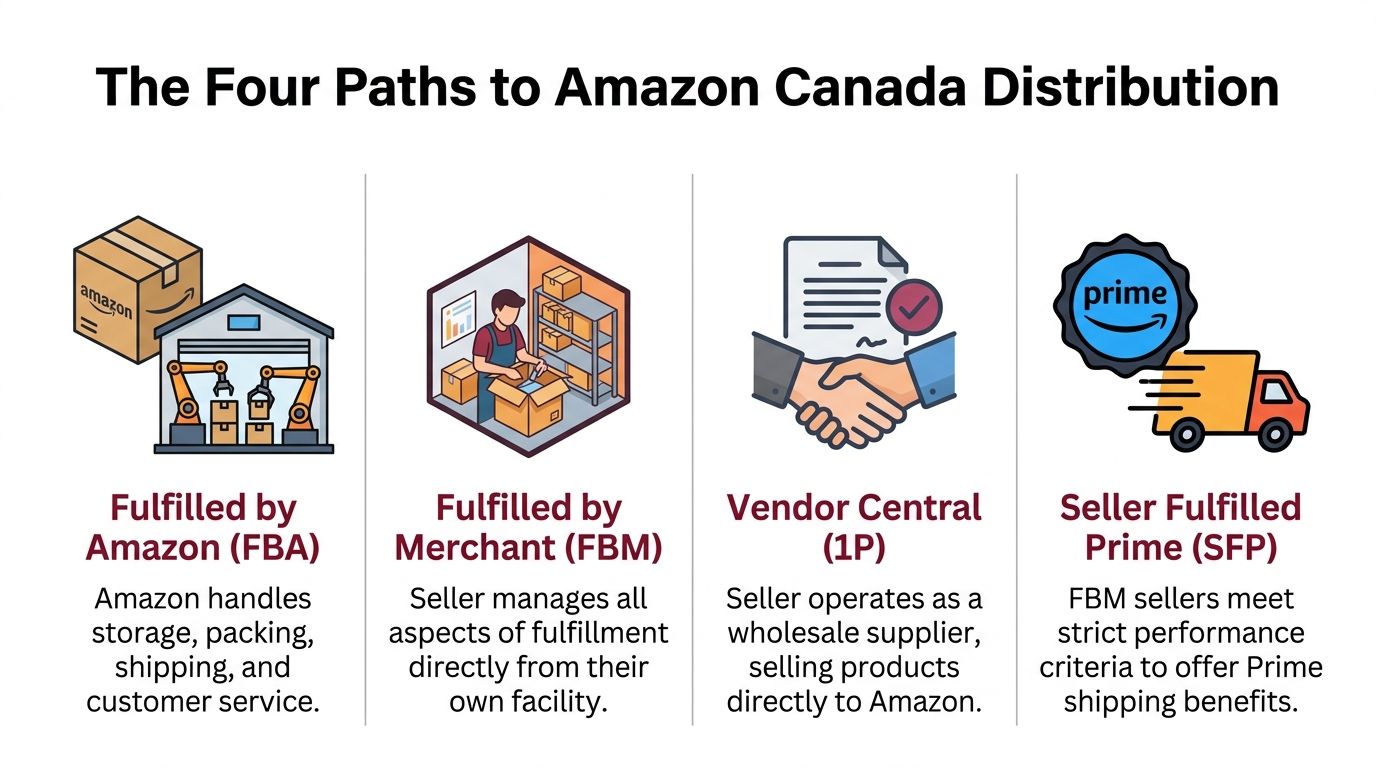
Most confusion around amazon Canada starts with language. Founders hear 1P, 3P, FBA, and sometimes SFP, then treat them like interchangeable Amazon jargon. They aren’t. Each model changes who owns the customer relationship, who carries inventory risk, who sets price in practice, and who absorbs operational friction.
Choosing the right distribution model is one of the most critical decisions when expanding your product line on Amazon Canada. It affects margin, control, scalability, and how your brand is perceived in a new market.
1P means Amazon is your customer
In 1P (often called Vendor Central), you sell wholesale to Amazon. Amazon issues purchase orders, takes ownership of inventory, and then retails the product to the end customer.
For a manufacturer, this feels familiar because it resembles a traditional wholesale account. It can simplify some operational demands, especially for brands used to dealing with retail buyers rather than managing a marketplace account directly.
But the trade-off is straightforward. You give up a meaningful degree of control over pricing, merchandising, replenishment rhythm, and how aggressively Amazon chooses to compete on your product.
3P means you are the merchant of record
In 3P (usually through Seller Central), the brand sells directly on Amazon’s marketplace. You control listings more closely, decide inventory strategy, and retain more influence over price and offer structure.
For established brands, 3P is usually the closer equivalent to running a direct channel inside a marketplace environment. That doesn’t mean it’s simple. It means control comes with workload.
FBA is a fulfilment layer, not a business model on its own
FBA (or Fulfilled by Amazon) sits inside the 3P world. You remain the seller, but Amazon stores inventory and handles pick, pack, shipping, and much of the customer-facing fulfilment process.
That gives you access to the delivery speed and operational footprint buyers expect from Prime. It also moves part of the logistics burden away from your internal team.
If you’re evaluating channel structure beyond a basic marketplace setup, TPR Brands has a broader view of Amazon store expansion strategy that sits above simple account management.
FBM keeps fulfilment in your hands
FBM (or Fulfilled by Merchant) means the seller manages storage, packing, shipping, and customer service obligations tied to fulfilment.
This can work when the product range is awkward for FBA, when inventory needs to stay within your own network, or when unit economics improve with direct fulfilment. It can also break quickly if your operation is not set up for Canadian delivery expectations.
Expanding your product line on Amazon Canada distribution models at a glance
| Attribute | 1P (Vendor Central) | 3P (Seller Central) | FBA (Fulfilled by Amazon) | FBM (Fulfilled by Merchant) |
|---|---|---|---|---|
| Who buys the stock | Amazon | End customer via your seller account | End customer via your seller account | End customer via your seller account |
| Pricing control | Lower | Higher | Higher | Higher |
| Inventory location | Typically in Amazon’s wholesale flow | Chosen by the seller | Stored in Amazon facilities | Stored in your own or partner facilities |
| Fulfilment responsibility | Amazon after purchase order | Seller chooses fulfilment model | Amazon handles fulfilment | Seller handles fulfilment |
| Customer experience control | More limited | Stronger | Shared, with Amazon controlling fulfilment execution | Stronger, but fully dependent on your operations |
| Operational burden on brand | Lower in some areas, higher in commercial negotiation | Higher | Moderate | Highest |
| Best fit | Brands comfortable with wholesale dynamics | Brands seeking direct marketplace control | Brands needing scale and fast delivery without running local fulfilment | Brands with strong logistics capability or specialised product needs |
The missing distinction founders should watch
Many brands compare 1P versus 3P and stop there. That’s incomplete.
The pertinent decisions are layered:
- Commercial model (through 1P or 3P)
- Fulfilment model (through FBA or FBM)
- Control model (based on how tightly you want pricing, listings, and channel access governed)
Practical rule: If your team can’t explain who controls price, who owns inventory risk, and who handles the customer promise under each model, you’re not ready to choose one.
Most avoidable problems begin there. Not with demand, but with a blurry operating structure chosen too quickly.
Analysing the True Cost of Each Distribution Model
A distribution model usually looks sensible in a planning deck. The true verdict shows up later, in gross margin, return rates, account staffing, and the first call from a domestic distributor asking why Amazon is now setting the reference price in Canada.
That is the Amazon Canada trade-off for established brands. The channel can add meaningful demand and market visibility, but it also exposes weak commercial structure very quickly. For hardware and home improvement brands, that risk is higher because products are heavier, returns are costlier, compliance is less forgiving, and channel pricing tends to matter to every other account.
Where 1P becomes expensive
1P appeals to founders for understandable reasons. It resembles a wholesale relationship. Amazon issues purchase orders, owns the customer transaction, and absorbs part of the marketplace operating burden your team would otherwise need to build.
The cost is control.
Amazon has the buying power to press on wholesale pricing, accruals, chargebacks, and promotional support. It can also move retail price in ways that help Amazon win conversion but weaken your broader channel position. If you already sell through dealers, distributors, or retail partners, that pricing pressure does not stay contained inside Amazon. It travels.
For established hardware brands, that often creates three commercial consequences:
- lower net margin than the initial model suggested
- weaker price discipline across other channels
- more friction with existing partners who see Amazon as the new benchmark
1P can still make sense, especially for a narrow SKU set or a deliberate wholesale relationship. It becomes dangerous when a founder mistakes lower operational involvement for lower total cost.
Where 3P creates hidden workload
3P gives the brand more say over pricing, listings, assortment, and inventory decisions. That is usually the right instinct for a company trying to protect brand value in a new market.
It also creates a significant operating function, not a side project.
Someone has to own catalog accuracy, forecast inventory, monitor account health, handle returns exceptions, manage support standards, and decide how aggressively to spend for visibility. Those costs do not always show up clearly in the launch model because they sit across multiple teams. Finance sees one part. Operations sees another. Sales feels the impact when channel conflict starts.
The right question is simple. Are you building a Canadian revenue channel, or are you also prepared to build the management layer that keeps it healthy?
FBA improves speed but changes the economics
FBA often gives established brands the strongest starting position on Amazon Canada because it closes the delivery gap without requiring a full local fulfilment operation from day one. Faster delivery generally helps conversion. It also reduces the day-to-day fulfilment burden on your internal team.
But FBA does not remove complexity. It relocates it upstream.
Inventory planning gets less forgiving. Packaging has to hold up to Amazon handling requirements. Returns need tighter financial controls because bulky or fragile products can become margin leaks quickly. The issue is not whether Amazon can ship efficiently. The issue is whether your product economics still work after storage, inbound freight, return processing, and inventory imbalance are added back in. The fundamental decision is which cost you want to carry.
This matters more in hardware than in lighter categories. A compact accessory and a boxed fixture may sell at similar price points, but their storage profile, damage exposure, and return cost are very different.
FBA works well when the unit economics and replenishment discipline are already sound.
FBM looks flexible until the customer promise is tested
FBM can be the right answer for selected SKUs, particularly oversized, specialized, slow-moving, or difficult-to-store items. It lets the brand keep inventory closer to its own network and avoid some of the fees and constraints that come with FBA.
As a primary entry model for cross-border expansion, it often disappoints.
The problem is not only freight. It is service consistency. Delivery windows run longer. Tracking quality can vary. Returns become more expensive to process. Customer communication gets harder when the shipment path crosses borders and multiple carriers. On Amazon, those issues show up in conversion and review quality long before they show up in a strategy memo.
That is why FBM should usually be treated as a selective tool, not the default structure for an established brand that wants to scale cleanly in Canada.
What tends to hold up in practice
The strongest Canadian entries usually keep strategic control with the brand and outsource only the parts where Amazon’s infrastructure provides a clear economic advantage.
That often means a mixed model. Core SKUs with healthy velocity and predictable economics go into FBA. Oversized or specialized items stay on FBM if the service level can still meet customer expectations. Some brands maintain a tightly scoped 1P relationship for a limited assortment while protecting the rest of the catalog through 3P.
That structure is less tidy on paper. It is often much better for margin protection, channel stability, and long-term brand value.
Convenience is a poor basis for market entry. A model chosen because it feels easy at launch often becomes expensive once pricing pressure, returns, and partner conflict show up.
How Smart Brands Protect Their Value and Pricing
The biggest mistake established brands make on expanding your product line on Amazon Canada isn’t picking the wrong listing tactic. It’s assuming the marketplace itself will preserve the integrity of the brand.
It won’t.
Amazon can be an excellent channel for reach and conversion, but it does not automatically protect pricing architecture, listing consistency, or channel discipline. Those outcomes come from deliberate control systems.
Brand protection starts before the first shipment
Many brands wait until they see listing changes, unauthorised sellers, or pricing drops before they act. By then, they’re already playing defence.
The stronger approach is to lock down the basics early:
- Brand Registry access so the brand has stronger control over listing content and enforcement options
- Tight channel authorisation so inventory doesn’t leak into the grey market
- Clear pricing policy that aligns Amazon with the rest of your channel strategy
- Consistent packaging and content standards so the product presents the same way across markets
Founders often think of these as legal or admin tasks. They are commercial strategy. A marketplace listing becomes the reference point for buyers, resellers, and even retail partners. If that reference point is messy, the brand becomes harder to defend everywhere else.
MAP matters because Amazon resets expectations fast
A minimum advertised price policy is not a magic shield, and enforcement always depends on market structure and legal context. But for established brands, some form of pricing discipline is usually necessary.
Without it, amazon canada can become the place where price drifts first. Once that happens, other partners notice. Then they react.
The brand pays twice. First through lower realised margin. Then through weaker trust from the accounts that were supposed to help build the market more broadly.
The marketplace price is rarely contained to the marketplace. Buyers and trade partners treat it as a public statement of what your brand is worth.
Compliance is part of brand protection
For hardware and home improvement brands, compliance isn’t a side issue. It shapes brand value directly.
A critical challenge in Canada is the combination of dual-language packaging requirements in English and French and CSA certification for tools, which creates meaningful operational cost and supply chain adjustment for brands entering from the US or Australia, as noted in this discussion of Canadian compliance hurdles for Amazon Canada sellers.
That matters for more than customs clearance. It affects how professional the brand appears, how smoothly inventory can move, and whether launch timelines stay under control.
What disciplined brands do differently
They don’t treat Amazon as a discount channel or a side project. They treat it as a visible market entry vehicle that needs rules.
That usually means:
- Restricting seller access rather than flooding the market with too many intermediaries.
- Building a listing governance process so titles, imagery, specifications, and compatibility details stay consistent.
- Aligning Amazon pricing with broader channel strategy instead of chasing volume at any cost.
- Preparing compliant packaging before scale rather than patching the issue after inventory lands.
Brands that skip these controls may still generate sales. They just do it while teaching the market to value the brand less.
Navigating Cross-Border Logistics and Compliance
A founder approves an Amazon Canada launch because the US playbook looks transferable. The first container lands, listings go live, and demand shows up. Then margin starts leaking through relabeling, cross-border returns, longer replenishment cycles, and compliance fixes that should have been resolved before inventory shipped.
For brands working with TPR Brands, this stage is where export strategy becomes essential. Expanding into Amazon Canada requires aligning logistics, compliance, and pricing before scale—not after problems appear.
That pattern is common in hardware and home improvement.
Cross-border expansion into Canada rewards brands that treat logistics, compliance, and channel economics as one operating decision. It punishes brands that split those decisions across sales, finance, and operations and hope the gaps sort themselves out later.
Delivery expectations reset fast
Canadian customers compare your offer to the delivery promise they already see on Amazon.ca, not to the constraints of your current export setup. That matters because speed affects conversion, review quality, and return rates, especially for replacement parts, seasonal products, and job-site purchases where timing is part of the value proposition.
For established brands, the key question is not whether you can ship into Canada. It is whether your chosen model can support a customer experience that protects the brand.
A slower cross-border setup can work for a narrow SKU test or for products with low urgency and high average order value. It usually breaks down when the catalogue includes replenishable items, weather-sensitive demand, or products that customers expect quickly because local alternatives are already available.
Compliance changes unit economics
In Canada, compliance is not an admin task at the end of the process. It changes cost structure and launch sequencing at the start.
The practical questions are straightforward:
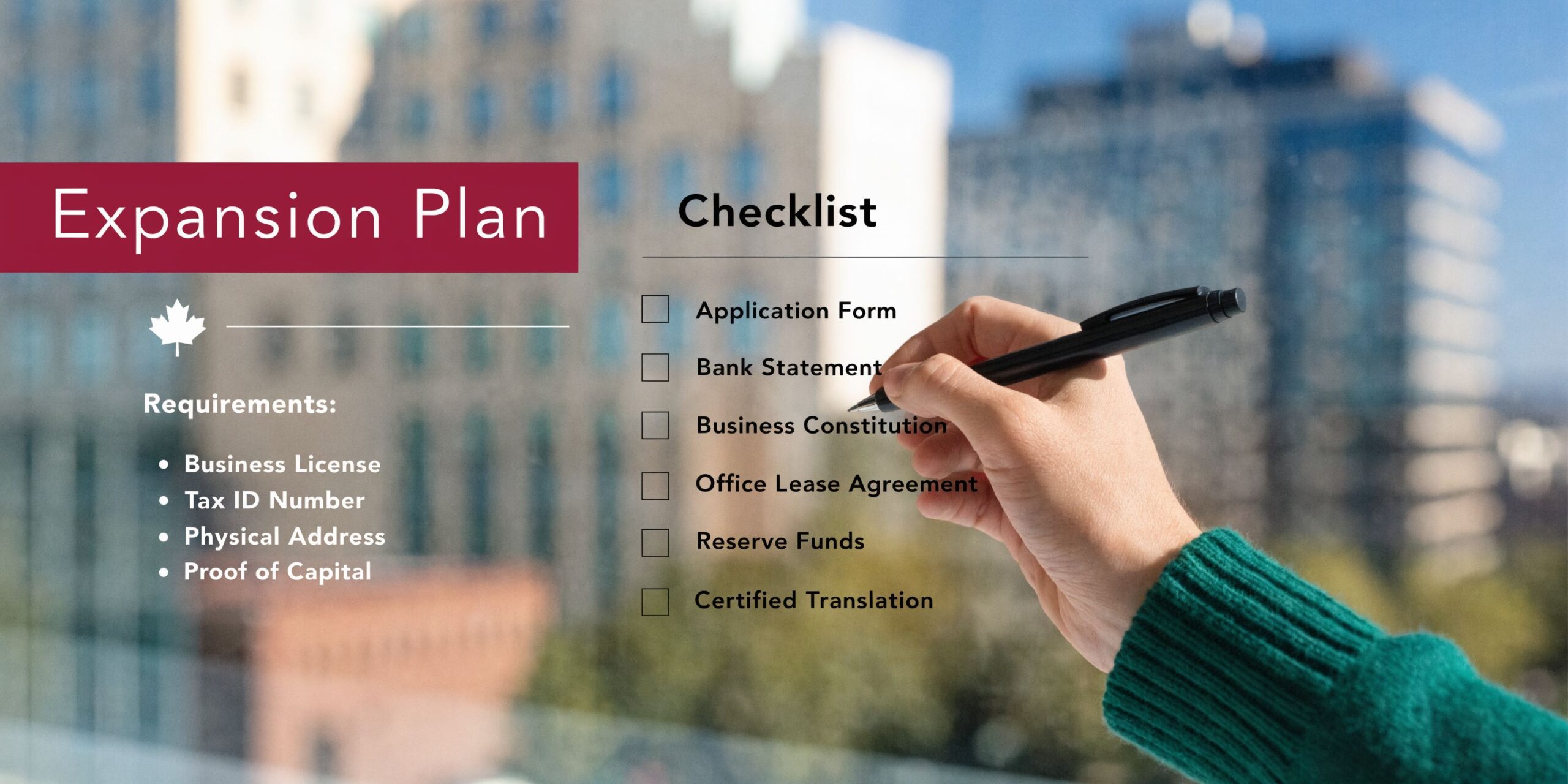
- Is the packaging bilingual on the physical product and retail packaging, not only in the listing copy?
- Does the category require additional product testing, certification, or documented safety support before scale?
- Who acts as importer of record, and does that align with the fulfilment model you chose earlier?
- Will returns be processed inside Canada, or will reverse logistics erase margin on lower-priced SKUs?
These choices affect landed cost, lead time, inventory risk, and even which products deserve a place in the opening assortment.
I have seen brands push ahead with a broad launch, then discover that a handful of SKUs absorb most of the compliance workload while contributing little profit. In Canada, a tighter initial range often produces a better result. It reduces packaging complexity, limits customs friction, and gives the brand more control over service levels.
Product selection needs a local operating lens
A strong US seller is not automatically a strong Canadian launch product.
Research from My Amazon Guy on product research differences on Amazon Canada points to a smaller, more niche-driven market where seasonality and local use cases matter more. That has direct implications for hardware and home brands. Climate, housing stock, and buying patterns can shift demand enough to change which SKUs deserve inventory commitment.
The commercial mistake is over-assortment.
A broad catalogue creates more compliance exposure, more inventory fragmentation, and more working capital tied up in slower-moving items. A focused catalogue gives the brand a cleaner test of demand and a better chance of keeping service levels high.
The operating model matters as much as the product
The operating model matters as much as the product. At this stage, founders need to make hard trade-offs. Shipping from outside Canada may preserve flexibility and reduce upfront commitment, but it often adds delay, return friction, and avoidable costs. Holding inventory closer to the customer improves speed and usually supports stronger conversion, but it also increases inventory planning pressure and raises the cost of getting the setup wrong.
There is no universal right answer. There is only a model that matches the product, margin profile, and level of control the brand wants to keep.
For brands that need more structure around freight, customs coordination, and fulfilment design, specialist support around international logistics planning for market entry can help reduce avoidable mistakes.
Strong brands treat compliance and logistics as margin decisions
The founders who handle expanding your product line on Amazon Canada well do not separate marketplace strategy from operations. They know a border delay, a packaging error, or a weak returns process eventually shows up as lower conversion, more customer complaints, or channel conflict.
That is why disciplined brands usually launch with fewer assumptions, fewer SKUs, and tighter operational control. In Canada, that restraint often protects more brand value than an aggressive launch ever will.
The Strategic Checklist for Amazon Canada Expansion
The technology stack behind Canadian e-commerce is no longer the limiting factor. AWS launched the Canada West (Calgary) Region in 2023 as a second infrastructure region in Canada, with three Availability Zones connected by a fully redundant 400 Gigabit Ethernet fibre network and projected investment of $17.9 billion USD (CA $24.8 billion) through 2037, according to AWS’s announcement of its second infrastructure region in Canada. The barrier for brands is now strategic and operational.
That is good news for founders who are willing to make disciplined choices.
Start with the commercial question
Before choosing any account structure, answer this plainly.
How much control are you willing to give up for easier distribution?
If the business can tolerate wholesale-style economics and less pricing control, 1P may have a place. If preserving price architecture and listing authority matters more, 3P usually makes more sense.
Is Amazon a channel or the channel?
If Amazon is one strategic route among several, its role should support the wider brand. If it becomes the dominant route too quickly, it can distort pricing and partner relationships.
Test the operating reality
Many expansion plans become honest at this stage.
-
Customer service capacity
Can your team support a Canadian customer base without dragging senior staff into daily marketplace issues? -
Returns handling
Is there a clear process for returned inventory, damaged goods, and customer dissatisfaction inside Canada? -
Inventory discipline
Can your planning team forecast tightly enough to avoid stock-outs, stranded stock, or slow-moving inventory in a new market? -
Catalogue suitability
Are the launch SKUs compact, durable, and operationally clean enough for the chosen fulfilment model?
Pressure-test compliance before marketing
A brand should never be learning core compliance details after ads are live.
Check physical packaging, not just digital content
English and French listing content is one issue. Bilingual product packaging is another. The second one can stop momentum far more decisively.
Review category-specific standards
Tools, electrical items, and safety-relevant hardware may need more than general marketplace readiness. If certification applies, build it into timing and cost assumptions from the start.
A short operational briefing can help teams align before execution:
Decide how narrow your launch should be
Founders often assume a bigger launch looks more serious. Usually the opposite is true.
A narrower launch is often stronger when:
- Only some SKUs are compliant
- Certain products fit FBA better than others
- Demand signals are stronger in a smaller subset
- The team wants to learn the market without exposing the full catalogue
Use this final filter
If a founder can’t answer yes to most of the questions below, the launch probably needs restructuring.
- Do we know which distribution model matches our margin expectations?
- Do we know who controls pricing in practice, not just in theory?
- Can we meet Canadian delivery expectations with the chosen fulfilment method?
- Is our packaging ready for the Canadian market?
- Have we selected SKUs based on Canadian demand, not home-market confidence?
- Can our team operate this channel without weakening the core business?
The brands that expand well into expanding your product line on Amazon Canada usually don’t move first. They decide first.
Turning Expansion from a Risk into a Scalable Channel
A founder approves an Amazon Canada launch because the market looks adjacent, the catalogue already exists, and the team assumes the hard part is getting listings live. Six months later, the channel is producing sales but also price leakage, margin compression, support strain, and tension with domestic distributors. That is the pattern established brands need to avoid.
Amazon canada can become a meaningful growth channel, but only if it is treated as a channel design decision with real financial consequences. The marketplace has reach, customer trust, and fast-delivery expectations. Those advantages help brands that enter with clear control over pricing, fulfilment, and account ownership. They punish brands that treat Canada as a light-touch extension of the US or home market.
The ultimate decision is not whether to sell. It is whether the structure you choose can protect contribution margin while preserving brand value.
Weak launches usually follow a predictable path. A brand picks the easiest operating model, ports over too many SKUs, accepts fragmented ownership across logistics and marketplace management, and waits for problems to appear before setting policy. Revenue may show up early. Control usually does not.
A stronger approach is narrower. Start with the products that can meet Canadian demand and service expectations without distorting margin. Choose a distribution model that matches how much authority the brand wants to retain. Build pricing discipline and seller control before broader rollout. For brands relying on Prime-speed delivery as part of the customer promise, the operating model behind that promise matters as much as the listing itself. That is why Amazon Prime channel strategy should be treated as a commercial decision, not just a fulfilment preference.
For many founders, this work is easier with one operating partner that understands marketplace economics, cross-border execution, and brand control in the same conversation. At TPR Brands, we work with established product companies making those decisions as they expand into international marketplaces, with a focus on protecting pricing, compliance, and long-term profitability.
If you’re serious about expanding your product line on Amazon Canada without sacrificing margin or brand control, TPR Brands can help you build a structured, export-ready strategy.
We work with established brands to position, launch, and scale products across Amazon and international markets using proven systems built from real-world distribution experience.
Reach out to discuss how we can support your expansion into Canada and beyond.
How TPR Brands Supports Amazon Canada Expansion
We help brands expand into Amazon Canada by:
- Identifying the right products for Canadian demand
- Structuring export and compliance from day one
- Protecting pricing and channel integrity
- Optimizing listings for visibility and conversion
- Scaling operations across international markets
Our focus is not just launching—but building a profitable, controlled expansion channel.